Water Extraction in New Braunfels, TX
The braided line under the upstairs bathroom sink let go on a Saturday while the family was at Landa Park, and it ran for six hours. The bathroom is under an inch of water, the hallway's engineered wood is lifting at the seams, and the kitchen ceiling below has a brown ring the size of a dinner plate. This site puts you through to an independent local provider who extracts water from houses in New Braunfels and across Comal County.
Pulling standing water off a Comal County slab before the drywall drinks it
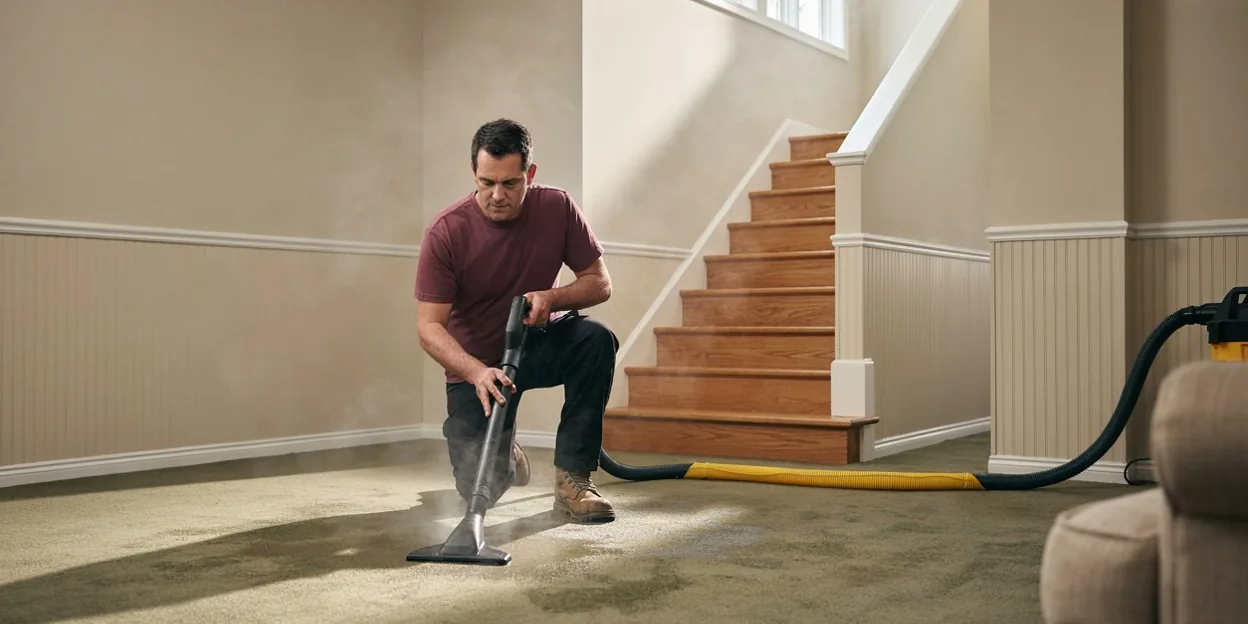
On a slab there is nowhere for water to go but sideways and up. Every hour it sits, it soaks deeper into the plank underlayment and the bottom of the drywall. The crew arrives with a truck-mounted or portable extractor and pulls the standing water off tile, wood, and bare concrete. On carpet they use a weighted wand that squeezes the pad through the fibers, which gets out far more than any shop vacuum.
Then come the first meter readings on everything the water could have reached: the subfloor plane under the hallway, the drywall at the base of each wall, the kitchen ceiling, and the toe kicks under the cabinets. Those first readings become the plan the drying crew works from.
The hour you have before the extractor arrives
Close the main at the meter box by the curb or the valve where the line enters the garage. Kill the breaker to any room with water at an outlet. Pull rugs, set furniture legs on foil or blocks, and move boxes to a dry room. Open every cabinet under a wet counter. Photograph each room before you move anything, then once more after. If water reached a floor register, say so when you call; the ducts in a Texas slab house often run through the attic, but some run under the floor.
Floors that come back, and floors that leave
Clean supply water is the easiest case. Tile usually survives once the grout and the slab under it dry. Engineered wood and laminate rarely do; the core swells and the planks do not lie flat again. Drywall that meters wet at the base is cut a foot or two up and the insulation behind it pulled, because a closed wall cavity in this climate does not dry on its own. A ceiling that took water from above is opened at the low point so it dries and so it does not fall by itself. With the standing water out, the remaining work is structural drying, and it takes days rather than hours.
Water from a toilet backup, a floor drain, or the river is a different category. Flooring and low drywall it touched come out rather than dry. Tell us where the water came from so the provider shows up ready for that.
New Braunfels houses and where the water runs
Most homes in Comal County went up after 1990 as slab-on-grade, and the two-story plans put the water heater, the air handler, and the plumbing for two bathrooms in the attic. A failure up there lands on the ceiling of the room below and then the floor beneath that. The older pier-and-beam houses near the Plaza and in Comal Town send water through the floorboards into the crawl space instead, which is a harder place to dry.
The soil matters too. Limestone on the west side and Blackland clay east of the interstate both move, and a slab leak can keep feeding water into a floor long after the room is extracted. A split line in the attic after a freeze is burst pipe water damage, and the extraction there starts upstairs.
A sudden pipe failure is often covered under a homeowner policy; a leak that dripped under a sink for months usually is not. Nobody here has read your policy, so we make no claim about what it covers. Have the crew log the readings and photos from the first visit, because the adjuster works from those numbers.
Calling about water on the floor right now
Tell us which level of the house is wet, what the source was, and whether it is still running. Mention if it is coming through a ceiling or has spread to another room. Have the address and a callback number. Call (830) 356-7502.